Ingredients
Method
Meats
- Bake bacon on a foil lined cookie sheet at 350 degrees while you're doing the rest of the steps. Brown Canadian Bacon in a small skillet while you're working on your hollandaise and once done, use tongs to set slices aside on a plate. Have your roast venison backstrap thinly sliced and on another plate.
Hollandaise Sauce
- Whisk egg yolks, water, salt, chile powder and paprika together until completely blended.
- Juice a few limes until you have three to four tablespoons. Ensure it's free of any seeds or pulp, and set aside.
- Cut two full sticks of cold, unsalted butter (to be clear, that's two 4oz sticks) into 1/4" thick slices, on a plate. The warming of the butter in the pan will serve as a temperature regulator to the overall sauce as it's coming together.
- Add mixture to a warm (you should still barely be able to touch the center) cast iron skillet. Turn heat up to medium-low (on a 1-8 scale burner I mean no more than a 3). The key thing here is you do NOT want to rapidly raise the heat. Doing so will result in the egg yolk forming curds faster than you can blend them.
- Do. Not. Stop. Whisking. Keep your whisk moving and constantly breaking up any curds you may start to see form. Imaging moving the whisk as if it were a paint brush, and you were trying to paint the whole surface of the skillet.
- Add 3-4 of your butter slices at a time, and whisk as they melt into the sauce. Repeat. Once half of your butter is added to the skillet, add half of your lime juice, keep whisking, and continue with your butter. Once the last of the butter is added, add the last of the lime juice and the sugar. Thoroughly whisk. Did I mention to whisk?
- Remove from heat and set pan on a trivet or cold burner, where it will remain warm until dish is assembled.
Poached Eggs
- Fill a saucepan 3/4 of the way up with water. Add vinegar, and bring to a near boil. You should see small bubbles rapidly forming at the bottom of the pan, but should not have a rolling boil. This is crucial because excessive agitation of the water will result in your egg whites being ripped apart from each other, before they're able to coalesce into a unified object, vis-a-vis your poached egg.
- Swirl the water in the pan with a wooden spoon until it is rotating at a moderate pace. Crack your egg and *gently* allow the egg to fall directly into the center of the vortex of water you have going. You want your hands to be as close to the water as possible without burning yourself. Alternatively, you may crack the egg into an appropriately sized ladle and gently tip the egg from the ladle into the water. The point here is the egg must not *plunge* into the water, but must be *set* into the water, as you would place a sleeping baby upon a bed. To drop the egg into the water violently, or to place it anywhere but the center of the vortex of water will result in the egg white being ripped apart, and your water becoming totally opaque, which will in turn require you to heat new water, since you'll be unable to poach future eggs and see what's going on in the pan. This is an art, and takes a little practice. Do not be discouraged if you mess up an egg as you learn! After all, you can't make an omelette (or eggs benedict) without breaking some eggs. :-)
- As your egg poaches, discourage it from sticking to the bottom of the pan by ever so gently coaxing it with your wooden spoon if it appears too affixed to the bottom of the pan. Once it rises to the top of the water and has been floating for about a minute, it's ready. Gently remove it from the water with your wooden spoon, and set it on a plate. Repeat as necessary.
Constructing Your Eggy Tower of Glory (bottom to top)
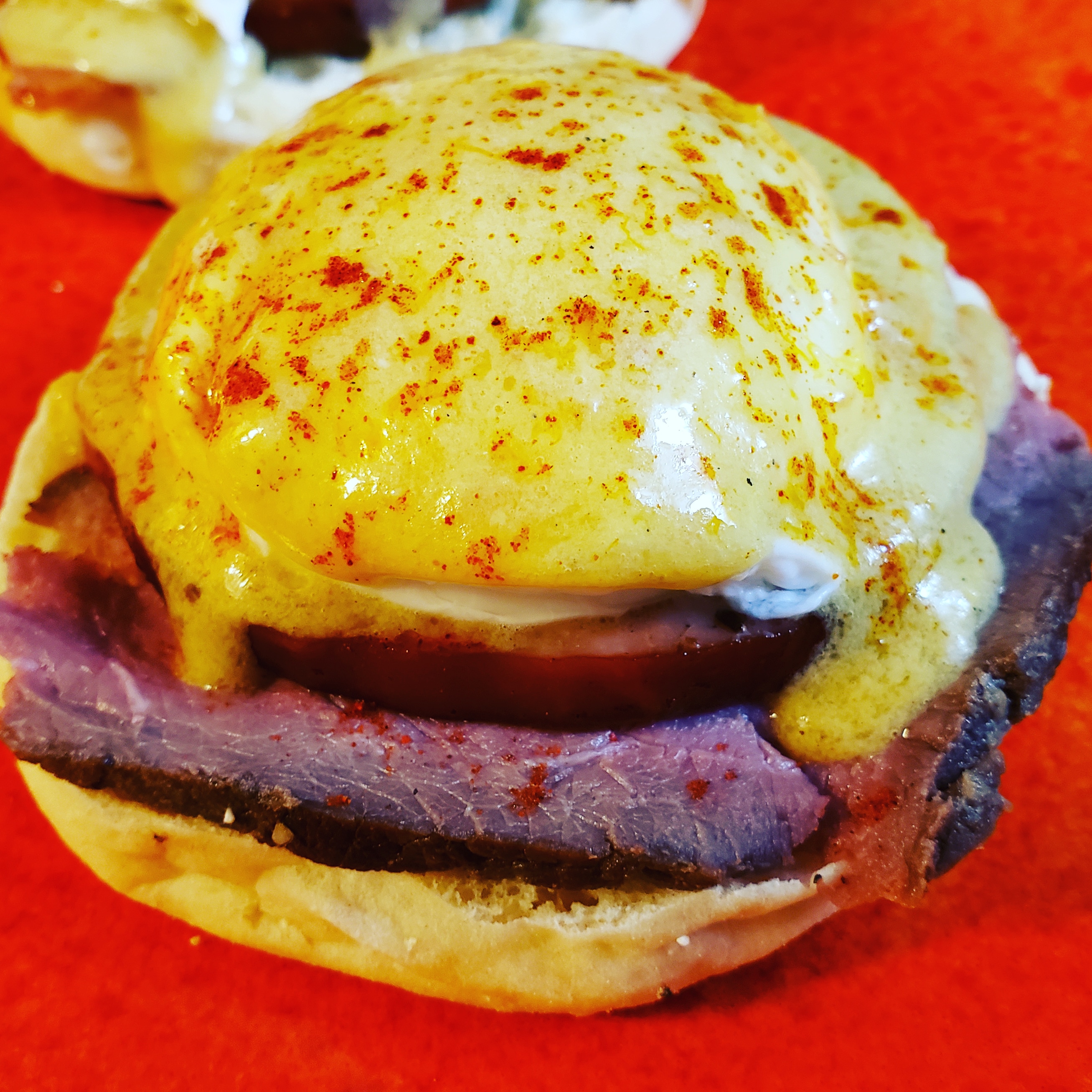
- English muffin halfTeaspoon of HollandaiseYour choice of meatsPoached eggTwo tablespoons of HollandaiseSprinkle of smoked paprika, as garnish
- Enjoy! You have successfully constructed the king of breakfasts!